
Identify Profitable Customers Beyond Revenue Alone
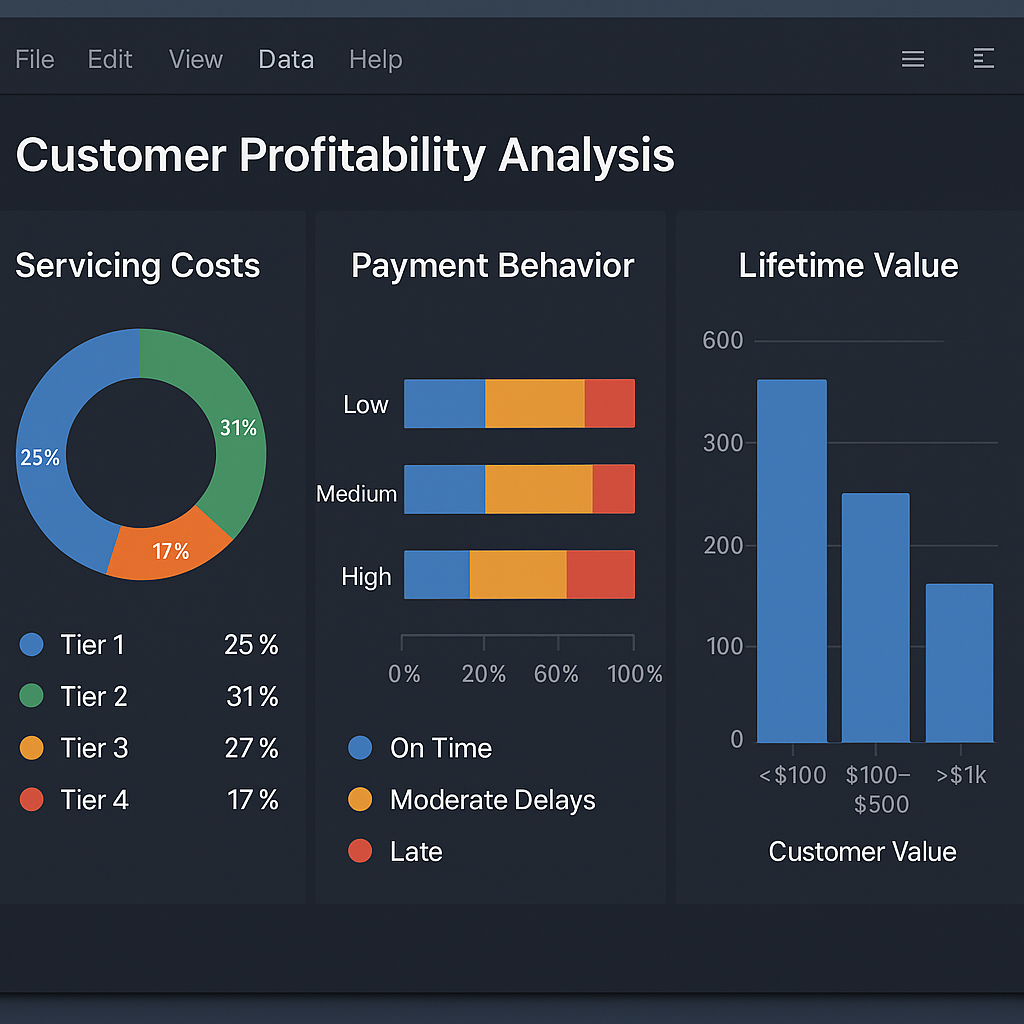
Identifying your most profitable customers requires more than just looking at revenue figures. While revenue is important, it doesn't paint the full picture of customer value. Businesses must consider factors like servicing costs, payment behavior, repeat business, discounts, and lifetime value to truly understand customer profitability.
Why Revenue Alone Isn't Enough
Revenue alone can be misleading when assessing customer value. A high-revenue customer might also incur high servicing costs, reducing overall profitability. For instance, a client who frequently requires support or returns products can diminish profit margins. Therefore, businesses should evaluate the net profit each customer brings after accounting for these costs.
Understanding Customer Profitability
Customer profitability is the net profit a company earns from a customer over a specific period. It considers all associated costs, including servicing, discounts, and returns. By analyzing these factors, businesses can identify which customers contribute most to the bottom line.
Factors Influencing Customer Value
Several factors influence customer value beyond revenue:
- Servicing Costs: High servicing costs can erode profits. Customers requiring extensive support or frequent returns may not be as valuable as they appear.
- Payment Behavior: Customers who pay promptly are more valuable than those who delay payments, impacting cash flow.
- Repeat Business: Loyal customers who make repeat purchases often provide more value over time.
- Discounts and Promotions: Customers who only purchase during sales may not be as profitable as those who buy at full price.
- Lifetime Value: This metric estimates the total revenue a customer will generate during their relationship with a business, helping prioritize long-term profitability.
How to Identify High-Value Customers
To identify high-value customers, businesses should analyze data on customer interactions, purchase history, and payment patterns. Tools like BoKapsys can help by providing insights into customer profitability through advanced analytics. By segmenting customers based on profitability metrics, companies can tailor their marketing and sales strategies to focus on the most valuable segments.
Practical Examples of Customer Analysis
Consider a retail business that uses BoKapsys to analyze customer data. They discover that a segment of customers who purchase high-margin products regularly and pay on time are their most profitable. By focusing marketing efforts on this segment, the business can enhance profitability and make smarter sales decisions.
Improving Profitability and Making Smarter Decisions
Once high-value customers are identified, businesses can improve profitability by:
- Offering personalized promotions to encourage repeat business.
- Optimizing customer service to reduce costs.
- Implementing loyalty programs to increase customer retention.
By focusing on these strategies, companies can enhance customer satisfaction and drive long-term growth.
In conclusion, understanding customer profitability is crucial for making informed business decisions. By looking beyond revenue and considering factors like servicing costs and lifetime value, businesses can identify their most valuable customers and optimize their strategies for sustained success.
Ready to get started?
Let us handle your bookkeeping so you can focus on what matters most.
Book a demo meetingGet new articles by email
Practical bookkeeping and tax tips, straight to your inbox.
I agree to receive email updates and understand I can unsubscribe at any time.
We will email you a confirmation link before adding you to the list.
Keep reading
Why Your Bank Balance Doesn't Match Your Books: A Guide to Bank Reconciliation
Your bank balance and accounting records don't always match. Learn the common reasons for these differences, why bank reconciliation matters, and how automation can make the process easier for small businesses.
Read more →AI Bookkeeping Software, Free to Start: What You Actually Get Before You Pay
Searching for "AI bookkeeping software free" usually turns up vague trials that ask for a card upfront. Here's what BoKapsys gives you with no bank connection or payment details required, and the exact moment a paid plan kicks in.
Read more →Xero Alternatives People Recommend on Reddit — And Why They Switch
Small business owners on Reddit consistently complain about the same three things: manual categorization, slow reconciliation, and reports that lag behind reality. Here's what those threads actually say, and how AI-first bookkeeping answers each complaint.
Read more →